Torre6

Torre del Popolo

Close to the Temple of Minerva stands the very tall Torre del Popolo (47 m.). The tower was built for the office of the Captain of the People, of which there is evidence in Assisi in the year 1267. The building was partly completed in 1274, a date readable on a bell, and housed the Captain's family, as is recorded for the year 1279. An inscription at the base of the tower states that the construction was completed in the year 1305, at the time of Captain Cabrino from Parma. On the occasion of the seventh centenary of the death of Saint Francis (1926), the crowning with Ghibelline battlements at the top was added.
fororomano

Foro Romano

A journey through the remains of the most important Roman buildings

Excavated several times between the 19th and 20th centuries, the area under Piazza del Comune is one of the most emblematic places of the Roman Asisium.
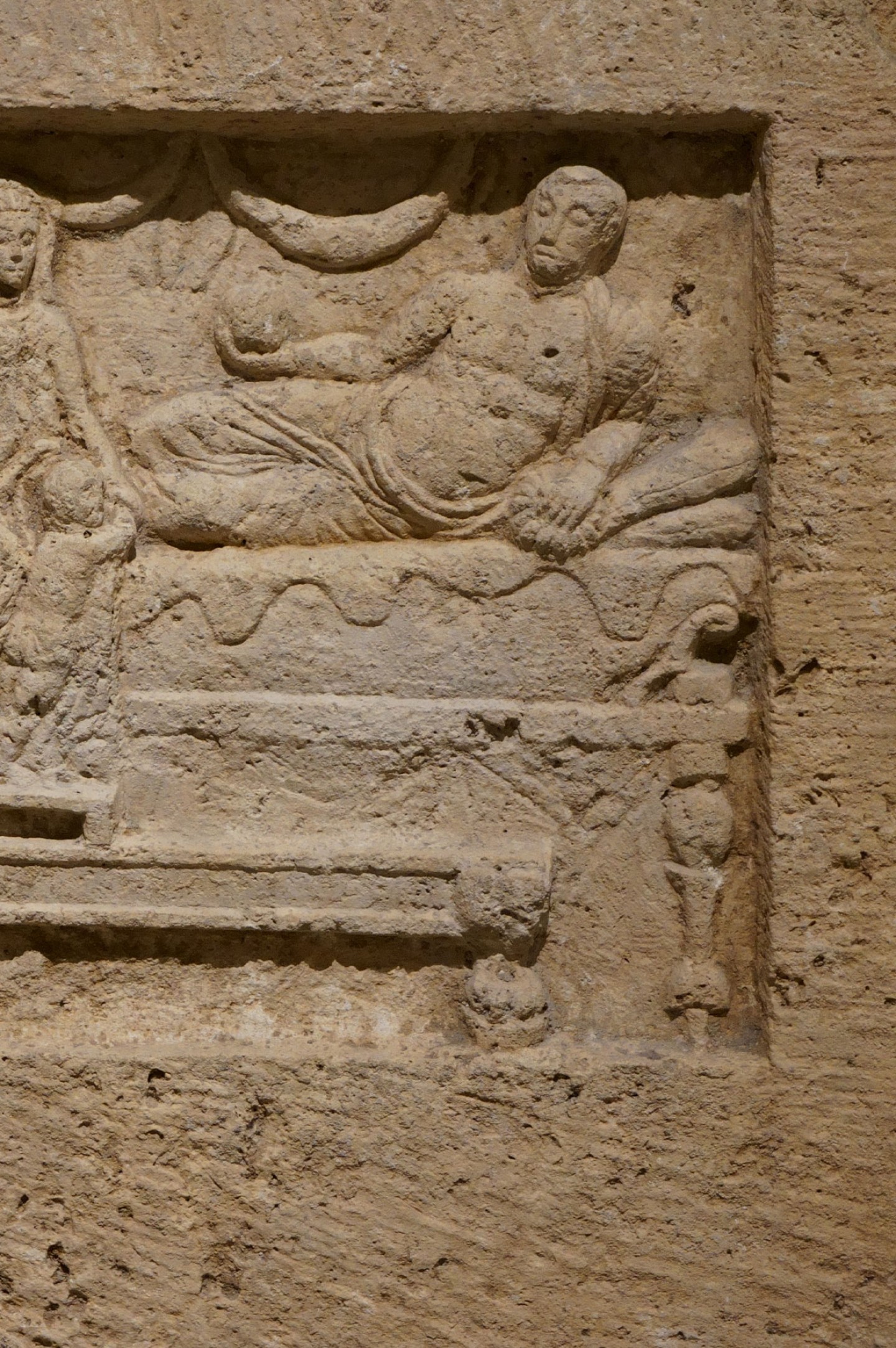
This place preserves the remains of important Roman buildings that characterized the center of the city.
After crossing the entrance, from the crypt of the church of San Nicolò, the space is delimited on the left by a large wall in travertine blocks, in front of which the lapidary develops.
The paving in front of the wall was also carefully made with travertine slabs: it was a work of great importance and commitment, as recalled by the remains of the long monumental inscription in bronze letters placed in the center of the stalls, of which today only the fixing holes remain.
The architectural development of the area and the presence of the Temple of Minerva which stands above the wall, probably dedicated to the Dioscuri (the twins Castor and Pollux) like the tetrastyle built in the centre of the stalls, has suggested the most probable hypothesis that it was precisely the forum of Asisium, consecrated to the cult of the Dioscuri.

La RoccaDSC_1327-2 copia

La Rocca Maggiore

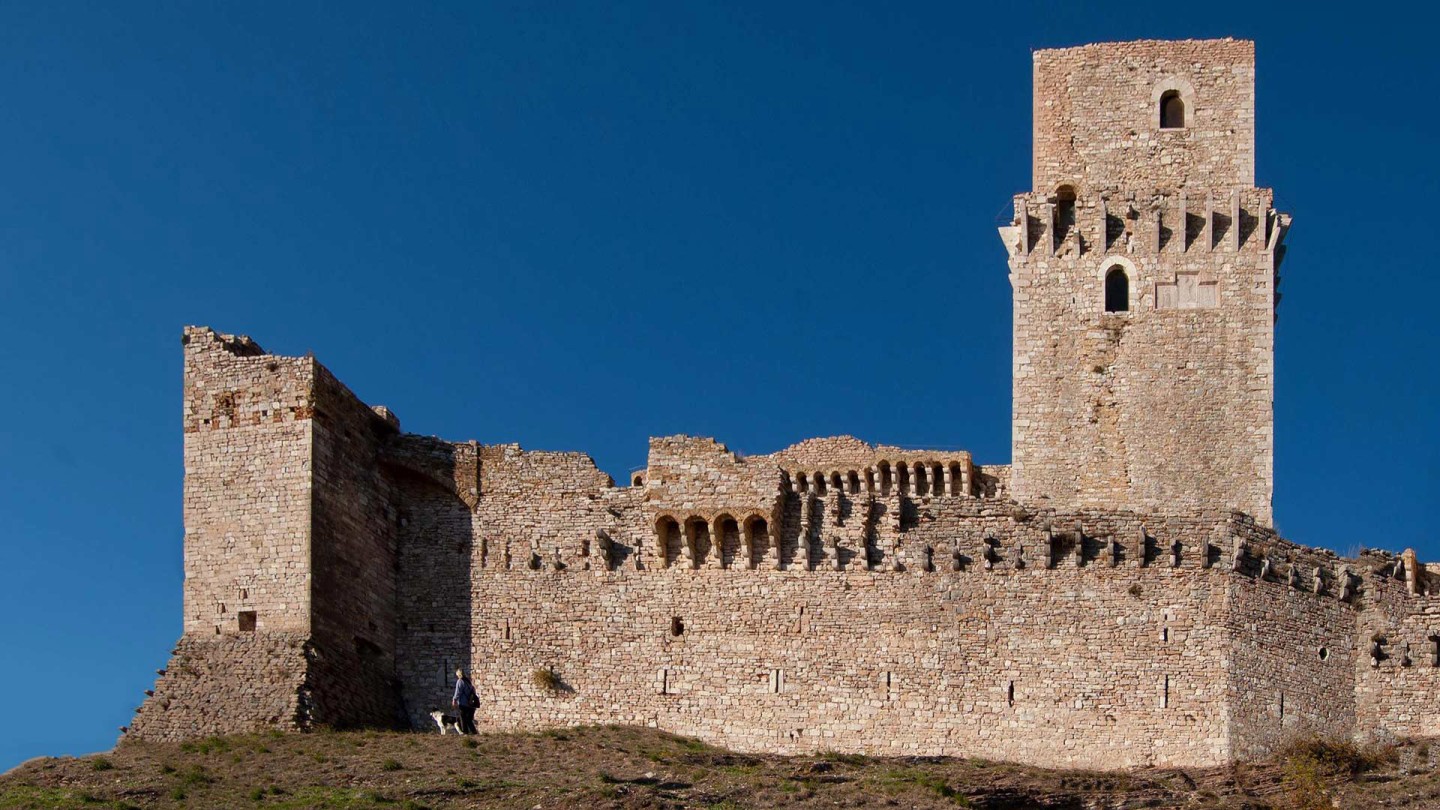
Built on the highest point of Assisi, the Rocca Maggiore stands out on the Asio hill that overlooks the city.

“The Castle is a splendid example of ruin, perched on the top of the mountain to whose sides Assisi seems to cling, while it stretches out two arms of stone to enclose the small city in its embrace”.
Built on the highest point of Assisi, already the site of the first settlement nucleus of the protohistoric age, the Rocca Maggiore can be reached from via Porta Perlici and stands out on the Asio hill that overlooks the city.
The first historical news of the fortress dates back to 1174 when the archbishop of Mainz stayed there, who occupied Assisi on behalf of Frederick Barbarossa.

From that moment, the fortress was the seat of German feudal power until Pope Innocent III expelled the Duke of Spoleto and with him the little Frederick II of Swabia, who had been baptized in Assisi in 1197, at the age of three. In 1198 the fortress was destroyed by a popular uprising.
Reconquered by the Papal State, it was rebuilt by Cardinal Egidio Albornoz in 1362.
In the centuries that followed, this splendid fortress became the symbol of the power of the factions that fought over the city, undergoing various renovations, such as that of Paul III Farnese who, in 1535, built the mighty circular bastion, on which the papal coat of arms still stands out today. During the sixteenth century, the imposing fortification lost its defensive function and became the residence of the castellans responsible for controlling the territory.
Later, until the unification of Italy, it was used as a prison, and then became a simple warehouse.
The entrance to the Rocca, now completely restored, opens near the sixteenth-century bastion.
Inside there is a large brick-paved courtyard dating back to the fourteenth century, onto which the service rooms opened.
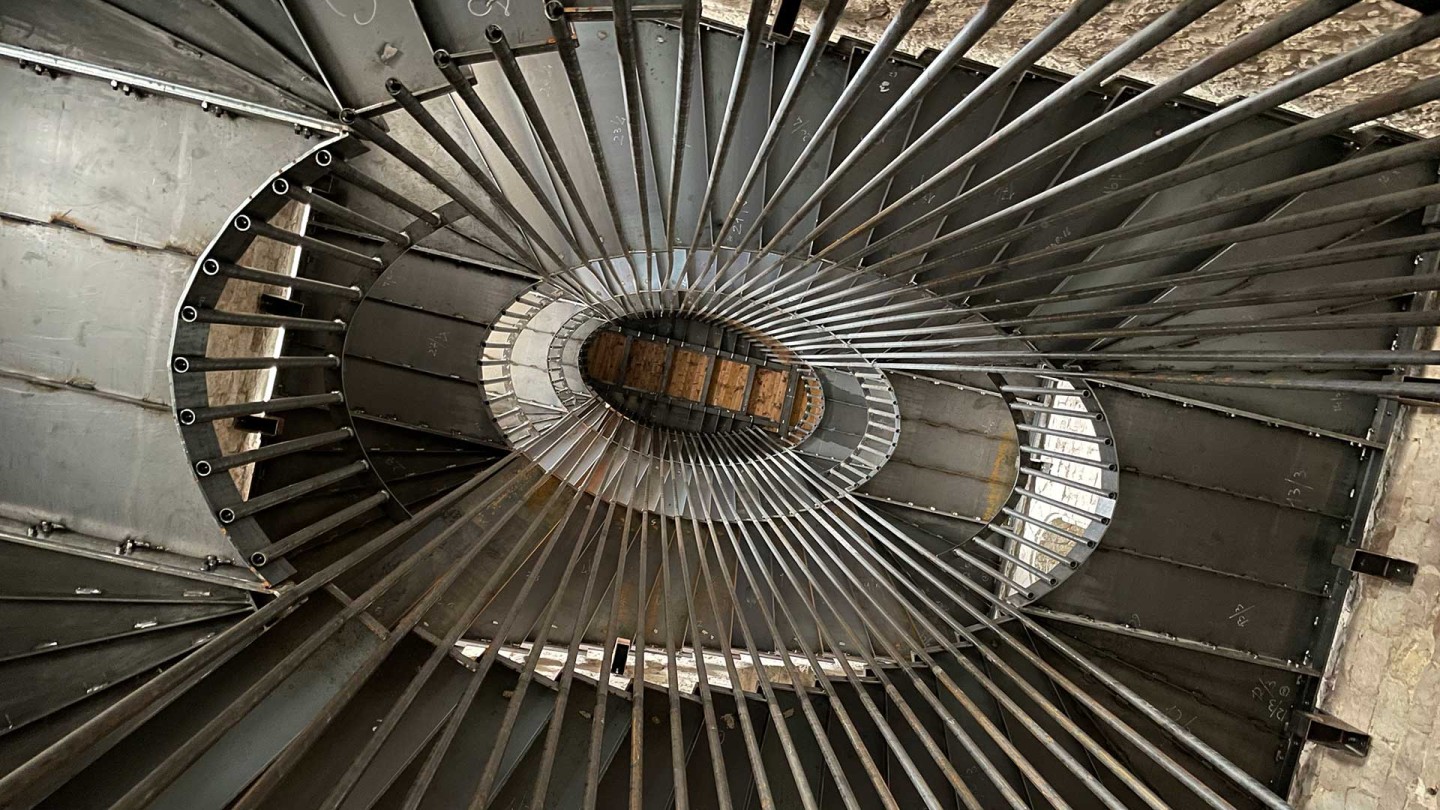
Adjacent to the courtyard stands the Maschio, once the residence of the castellan, divided into five overlapping rooms and joined together by a spiral staircase. From the top of the Maschio you can enjoy an extraordinary view of the city and the valley, from Perugia to Spoleto. The eye is lost in a boundless space that extends between the fertile sweetness of the plain and the rugged gorge of the Tescio river, revealing a breathtaking panorama.

PinacotecaDSC_1540

La Pinacoteca

A testimony to the political, civil and religious evolution of the city

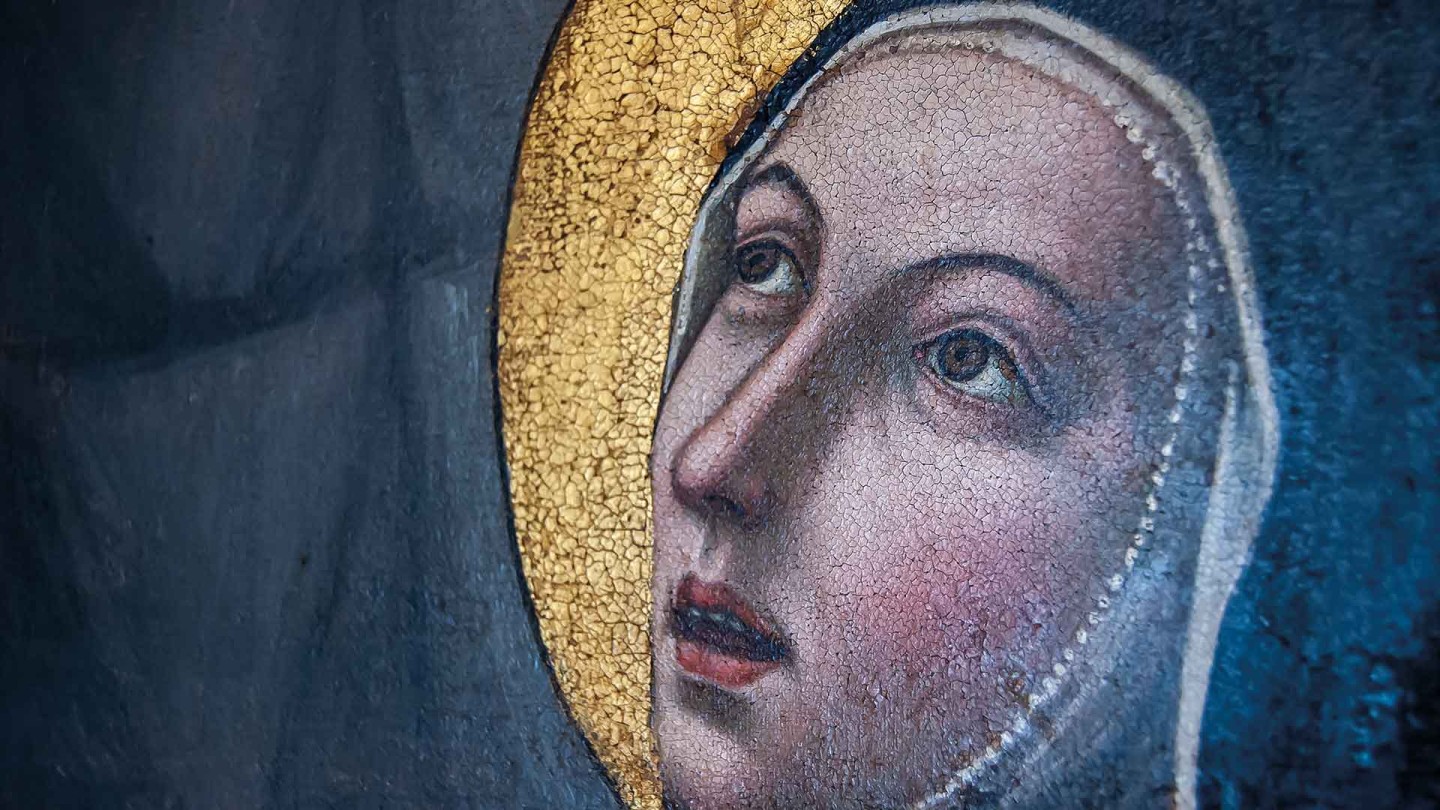
The collection, created at the end of the 19th century with the aim of preserving the city's artistic heritage, includes paintings dating from the 13th to the 16th century, mostly from public buildings, street shrines, city gates, confraternity headquarters and city hospitals.
Among the decorated rooms of the palace, you can admire the frescoes of the Studiolo adjacent to the small balcony that recall the style of the Umbrian neoclassical painter Antonio Castelletti, born in Paciano on Lake Trasimeno, who worked in 1820 on some restorations in Santa Maria degli Angeli.
Inside the Pinacoteca are collected some objects of everyday use that tell the story of life in Assisi in ancient times: vases, glass and metals, dating between Protohistory and the full Roman age. Exceptional are the fragments of frescoes from under Casa Rocchi, a domus excavated in 1864 by the Archaeological Society of Subasio and today known only from drawings and these few fragments of painted plaster. The Art Gallery also houses a small group of Egyptian finds donated to the Community by the Cortona religious Guido Corbarelli, who from 1888 held the office of Archbishop of Pelusio and Apostolic Delegate for Arabia and Egypt.

Assisi-SB-02-biancoAssisi-logo-bianco

Copyright 2023 Assisi Serafica Bellezza ©   Tutti i diritti riservati | booking@operalaboratori.com | Privacy policy

    Seguici su: